Sentryline-M wire rope safety barrier provides safe vehicle containment and redirection, utilising the tensile strength of tensioned wire rope cables supported by steel posts. The innovative cable to post connection facilitates rapid installation as the cables can be installed in any order and removed and re-attached individually. The system is anchored with non-release terminals and may be installed on the shoulder (verge) or in the median to prevent dangerous cross-over accidents.
Crash Test Evaluation
Barrier Configuation
Vehicle Type
Vehicle Mass
impact speed
impact angle
impact energy
Dynamic Deflection
Posts at 2m Centres
Posts at 3m Centres
Posts at 3m Centres
Barrier Configuation
Posts at 2m Centres
Vehicle Type
Vehicle Mass
impact speed
impact angle
impact energy
Dynamic Deflection
Barrier Configuation
Posts at 3m Centres
Vehicle Type
Vehicle Mass
impact speed
impact angle
impact energy
Dynamic Deflection
Barrier Configuation
Posts at 3m Centres
Vehicle Type
Vehicle Mass
impact speed
impact angle
impact energy
Dynamic Deflection
Product Features
MASH TL4 Compliant
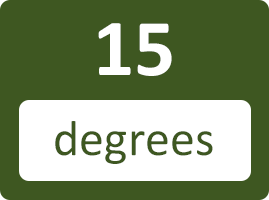
Containment of a 10,000 kg rigid truck travelling at 90 km/h and 15 degrees.
Sentryline-M provides safe vehicle containment and redirection as the tensioned cables deflect. The cables are supported by posts which are typically positioned within plastic sleeves that are concreted into the ground. The posts are designed to yield by bending proximate to ground level when contacted by an errant vehicle.
What is the MASH TL3 impact performance of Sentryline-M wire rope barrier?
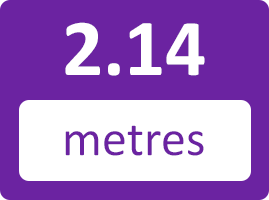
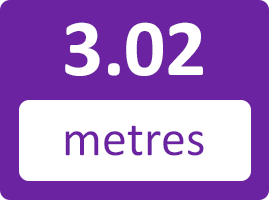
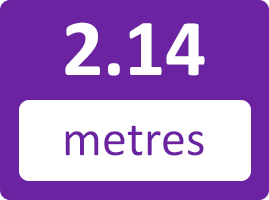
The maximum dynamic deflection and working width of Sentryline-M with posts at 2.0 m centres during MASH TL3 crash testing was 2.14 m. The maximum dynamic deflection and working width of Sentryline with posts at 3.0 m centres during MASH TL3 crash testing was 3.02 m. These results were recorded during an impact with a 2270 kg pick-up truck travelling at 100 km/h and 25 degrees.
What is the MASH TL4 impact performance of Sentryline-M wire rope barrier?
The maximum dynamic deflection of Sentryline-M with posts at 3.0 m centres during MASH TL4 crash testing was 3.02 m. The working width of Sentryline-M with posts at 3.0 m centres during MASH TL4 crash testing was 3.05 m. These results were recorded during an impact with a 10,000 kg rigid truck travelling at 90 km/h and 15 degrees.
How is Sentryline-M anchored at each end of the system?
The Sentryline-M End Terminal is required on the leading and trailing end of the system and features an anchor bracket cast into a concrete block. The wire rope cables gradually taper from full height before anchoring at ground level.
What crash test evaluation is performed on the Sentryline-M End Terminal?
The Sentryline-M End Terminal has been crash tested in accordance with MASH Test Level 3 (TL3). The Sentryline-M End Terminal is a non-release terminal. The non-release feature allows the system to remain anchored following design impacts.
What site considerations are required when installing the Sentryline-M End Terminal?
When struck at the end, the Sentryline-M End Terminal will yield. Consideration should be given to ensure the area immediately behind the terminal is traversable and free of fixed object hazards.
How are the fittings attached to the wire cables?
The galvanised end fittings are machine-swaged to the wire rope cables. This process is undertaken onsite once the cables have been cut to length.
What are tension bays?
Tension bays feature turnbuckles that connect the end fittings and allow the system to be tensioned. For installations less than 300 m in length, one (1) tension bay located near the middle of the system is required. For longer installations, tension bays should be positioned not more that 150 m from the end terminal and at maximum spacings of 350 m throughout the system.
What is the recommended minimum radius for the installation of Sentryline-M?
The recommended minimum horizontal radius for all cable barrier systems, including Sentryline-M is 200 m.
What is the recommended sizing of the post foundation?
The recommended post footing sizing is 300 mm diameter x 750 mm deep. The concrete shall be a minimum compressive strength of 25 Mpa.
Request a Quote
Sign Up For Safe DirectioN Exclusive Content
Fill out the form below to get access to exclusive Safe Direction content, on our extranet website.